Changelog: Created draft rewrite on 2025-12-09; revised references and structure.
¶ PRP (Platelet-Rich Plasma)
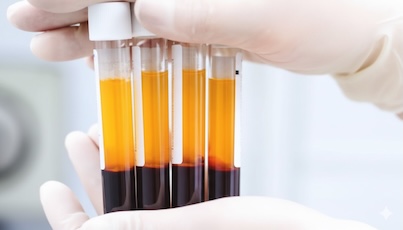
Platelet-Rich Plasma (PRP) is an autologous blood product containing a supra-physiological concentration of platelets and growth factors, widely used in orthopedics, dermatology, and dentistry to promote tissue repair and regeneration. By concentrating platelets from a patient's own blood, PRP therapy aims to deliver a potent cocktail of bioactive proteins directly to the site of injury or aging, accelerating healing processes that might otherwise be slow or incomplete.
¶ What is PRP?
¶ Definition and Composition
PRP is defined as a volume of autologous plasma that has a platelet concentration above baseline—typically 3 to 5 times the normal count (which ranges from 150,000 to 400,000/µL). A therapeutic PRP preparation often targets a concentration of at least 1,000,000 platelets/µL[1].
The composition of PRP extends beyond platelets. Depending on the preparation method, it may contain varying levels of:
- White Blood Cells (Leukocytes): Neutrophils, monocytes, and lymphocytes.
- Red Blood Cells (RBCs): Usually minimized to prevent inflammation.
- Plasma Proteins: Fibrinogen (which forms a scaffold), albumin, and globulins.
¶ The "Platelet" in PRP
Platelets are anucleate cell fragments derived from megakaryocytes in the bone marrow. While primarily known for hemostasis (clotting), they are also reservoirs of growth factors stored in intracellular -granules. Upon activation (either naturally by collagen/thrombin or artificially by calcium chloride), these granules degranulate, releasing their bioactive cargo[2].
¶ Preparation Methods
PRP preparation is not standardized, leading to significant variability in clinical outcomes. The general process involves:
- Venipuncture: Collection of 10–60 mL of whole blood into tubes containing an anticoagulant (e.g., acid citrate dextrose or sodium citrate).
- Centrifugation: The blood is spun to separate components based on density.
- Single-Spin: Separates red blood cells from plasma/platelets. Often yields lower platelet concentrations (1.5–3x baseline).
- Double-Spin: First spin separates RBCs; second spin concentrates platelets from the plasma. Can yield higher concentrations (4–8x baseline)[3].
- Extraction: The platelet-rich layer (buffy coat or plasma layer) is harvested.
¶ Classification: Leukocyte-Rich vs. Leukocyte-Poor
The presence of leukocytes significantly influences the biological effect of PRP:
- Leukocyte-Rich PRP (LR-PRP): Contains high levels of neutrophils and monocytes. Neutrophils can release inflammatory cytokines (IL-1, TNF-) and proteases/ROS, potentially exacerbating inflammation initially. Often used in chronic tendinopathies where an inflammatory "re-start" is desired[4].
- Leukocyte-Poor PRP (LP-PRP): Most leukocytes are removed. Preferred for intra-articular injections (e.g., knee osteoarthritis) to minimize synovial inflammation[1:1][5].
¶ Mechanisms of Action
The therapeutic potential of PRP rests on the delivery of growth factors (GFs) that modulate the healing cascade. Key factors include:
| Growth Factor | Primary Function |
|---|---|
| PDGF (Platelet-Derived Growth Factor) | Chemotaxis for macrophages/fibroblasts; stimulates collagen synthesis and proliferation. |
| TGF- (Transforming Growth Factor-beta) | Regulates cell proliferation/differentiation; stimulates ECM production (collagen, proteoglycans). |
| VEGF (Vascular Endothelial Growth Factor) | Potent stimulator of angiogenesis (new blood vessel formation). |
| IGF-1 (Insulin-like Growth Factor 1) | Promotes cell survival, proliferation, and matrix synthesis. |
| EGF (Epidermal Growth Factor) | Stimulates epithelial cell proliferation and migration. |
Biological Effects:
- Inflammation Modulation: While early-phase PRP (especially LR-PRP) may be pro-inflammatory, the subsequent release of anti-inflammatory cytokines (e.g., IL-1RA) and lipoxins helps resolve chronic inflammation.
- Cell Proliferation and Recruitment: GFs attract stem cells and fibroblasts to the injury site.
- Angiogenesis: Improved blood supply accelerates tissue repair.
- Anabolic Effect: Increases synthesis of Type I and III collagen and hyaluronic acid[2:1][6].
¶ Evidence by Condition
¶ 1. Knee Osteoarthritis (OA)
Evidence Grade: Moderate
PRP is increasingly regarded as a viable option for mild-to-moderate knee OA (Kellgren-Lawrence grades 1–3).
- Efficacy: A 2025 meta-analysis in the American Journal of Sports Medicine found PRP injections resulted in clinically significant improvements in pain and function compared to placebo and hyaluronic acid (HA), particularly at 6–12 months post-injection[5:1].
- Protocol: LP-PRP is generally superior to LR-PRP for joint injections as it reduces post-injection pain and synovial inflammation. Multiple injections (2–3 spaced weekly) often show better results than a single shot.
- Comparison: Superior to corticosteroids for long-term benefit (steroids work faster but effects wear off in weeks and may harm cartilage)[7].
¶ 2. Tendinopathy
Evidence Grade: Low to Moderate (Condition Dependent)
- Lateral Epicondylitis (Tennis Elbow): Strongest evidence. Several RCTs show LR-PRP provides better long-term pain relief and functional improvement than corticosteroid injections[8].
- Patellar and Achilles Tendinopathy: Results are mixed. Some studies show benefit, particularly in chronic recalcitrant cases, while others show no difference compared to saline or eccentric exercise alone. LR-PRP is typically preferred here to stimulate a healing response in degenerate tissue.
¶ 3. Androgenetic Alopecia (Hair Loss)
Evidence Grade: Moderate
PRP is used to stimulate hair follicle stem cells and prolong the anagen (growth) phase.
- Efficacy: A 2025 systematic review and meta-analysis comparing PRP to topical minoxidil found that PRP significantly increased hair density and hair count in both men and women. It is often used as an adjunct to minoxidil or finasteride[9].
- Protocol: typically 3–4 monthly sessions followed by maintenance every 3–6 months.
¶ 4. Skin Rejuvenation
Evidence Grade: Low to Moderate
Often marketed as the "Vampire Facial" when combined with microneedling.
- Effects: Increases dermal collagen levels, improves skin texture, and reduces fine wrinkles.
- Acne Scars: A 2025 review confirmed that combining PRP with microneedling or fractional laser improves the appearance of atrophic acne scars more than the physical modality alone, with faster recovery times[6:1].
¶ Safety and Adverse Events
Since PRP is autologous, the risk of immunogenic reactions or disease transmission is virtually zero.
- Common Side Effects: Pain and stiffness at the injection site (can last days, especially with LR-PRP), bruising, and temporary swelling.
- Rare Complications: Infection (if sterile technique is breached), nerve injury (needle trauma).
- Contraindications:
- Critical thrombocytopenia (<100,000/µL).
- Hemodynamic instability.
- Active infection at the site.
- Chronic liver disease.
- Use of NSAIDs (relative contraindication around the time of procedure, see below).
¶ Practical Considerations
¶ NSAID Restriction
There is a theoretical concern that Non-Steroidal Anti-Inflammatory Drugs (NSAIDs) inhibit platelet function (COX-1 inhibition) and may blunt the growth factor release or the inflammatory phase necessary for healing.
- Recommendation: Many clinicians advise stopping NSAIDs 1 week before and 1–2 weeks after PRP, though robust clinical evidence confirming this necessity is lacking. Paracetamol (acetaminophen) is usually permitted for analgesia.
¶ Rehabilitation
Post-injection protocols vary but generally include:
- Phase 1 (0–3 days): Relative rest, protect the area.
- Phase 2 (3 days–2 weeks): Gradual return to motion, no heavy loading.
- Phase 3 (2+ weeks): Progressive strengthening.
¶ Current Consensus
PRP represents a paradigm shift from "suppressing symptoms" (e.g., corticosteroids) to "promoting repair." However, it is not a magic bullet. Efficacy is highly dependent on:
- Preparation: Platelet dose and leukocyte content.
- Pathology: Works better for early OA and chronic tendinopathy than for acute muscle tears or advanced bone-on-bone arthritis.
- Patient Factors: Age, health status, and platelet quality may affect outcomes.
Standardization of preparation protocols remains the most critical gap in the field. Until then, "PRP" refers to a family of products rather than a single standardized drug.
¶ References
¶ References (draft IDs)
- REF-001: Marx 2001 (Definition)
- REF-002: Sundman 2014 (Mechanism)
- REF-003: Fadadu 2019 (Preparation)
- REF-004: Lana 2016 (LR vs LP)
- REF-005: Bensa 2025 (Knee OA Meta-analysis)
- REF-006: Malcangi 2025 (Skin Review)
- REF-007: McLarnon 2021 (PRP vs Steroids)
- REF-008: Fitzpatrick 2017 (Tendinopathy)
- REF-009: Gupta 2025 (Alopecia)
Marx RE. Platelet-rich plasma (PRP): what is PRP and what is not PRP? Implant Dent. 2001;10(4):225-228. PMID: 11813662 ↩︎ ↩︎
Sundman EA, Cole BJ, Karas V, Della Valle C, Tetreault MW, Mohammed HO, Fortier LA. The anti-inflammatory and matrix restorative mechanisms of platelet-rich plasma in osteoarthritis. Am J Sports Med. 2014;42(1):35-41. DOI: 10.1177/0363546513507766 ↩︎ ↩︎
Fadadu PP, Mazzola AJ, Fletcher CW, Jeyakumar V. Review of concentration yields in commercially available platelet-rich plasma (PRP) systems: a call for PRP standardization. HSS J. 2019;15(2):139-152. DOI: 10.1007/s11420-018-9637-z ↩︎
Lana JF, Weglein A, Sampson SE, et al. Randomized controlled trial comparing hyaluronic acid, platelet-rich plasma and the combination of both in the treatment of mild and moderate osteoarthritis of the knee. J Stem Cells Regen Med. 2016;12(2):69-78. PMID: 28058027 ↩︎
Bensa A, Previtali D, Sangiorgio A, et al. PRP Injections for the Treatment of Knee Osteoarthritis: The Improvement Is Clinically Significant and Influenced by Platelet Concentration: A Meta-analysis of Randomized Controlled Trials. Am J Sports Med. 2025;53(3):745-754. DOI: 10.1177/03635465241246524 ↩︎ ↩︎
Malcangi G, Inchingolo AM, Inchingolo AD, et al. The Role of Platelet Concentrates and Growth Factors in Facial Rejuvenation: A Systematic Review with Case Series. Medicina. 2025;61(1):84. DOI: 10.3390/medicina61010084 ↩︎ ↩︎
McLarnon M, Heron N. Intra-articular platelet-rich plasma (PRP) injections versus corticosteroid injections for knee osteoarthritis: a systematic review and meta-analysis. BMC Musculoskelet Disord. 2021;22(1):550. DOI: 10.1186/s12891-021-04398-z ↩︎
Fitzpatrick J, Bulsara M, Zheng MH. The Effectiveness of Platelet-Rich Plasma in the Treatment of Tendinopathy: A Meta-analysis of Randomized Controlled Clinical Trials. Am J Sports Med. 2017;45(1):226-233. DOI: 10.1177/0363546516643716 ↩︎
Gupta A, et al. Comparative Efficacy and Safety of Platelet Rich Plasma (PRP) versus Topical Minoxidil for Androgenetic Alopecia: A Systematic Review and Meta-analysis. Aesthetic Plast Surg. 2025. DOI: 10.1007/s00266-025-05394-7 ↩︎
Comments
Discussion