¶ Maca (Lepidium meyenii)
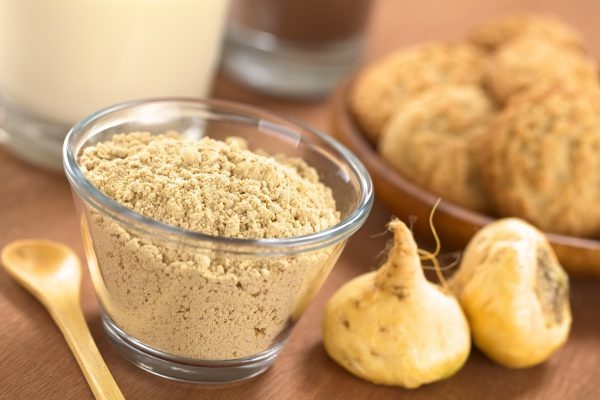
Maca (Lepidium meyenii) is an adaptogenic root vegetable native to the high altitudes of the Peruvian Andes. Traditionally cultivated for both nutritional and medicinal purposes, it is widely used as a supplement to enhance libido, increase subjective energy, and support hormonal transition symptoms.
Unlike many botanical aphrodisiacs marketed as "testosterone boosters," Maca operates primarily through central nervous system modulation and endocannabinoid pathways. Clinical trials consistently show that its effects on sexual function and mood occur independently of changes to serum testosterone or estrogen levels.
¶ At a Glance
- What is it? A Peruvian cruciferous vegetable root, typically dried and consumed as a powder or extract.
- Will it help me? It is highly reliable for improving subjective libido and mood in both men and women, and can help alleviate symptoms of menopause and mild erectile dysfunction.
- Bottom Line: Maca acts as a central nervous system adaptogen. It effectively boosts sexual desire and energy through endocannabinoid and serotonergic pathways, without altering systemic testosterone or estrogen levels.
¶ Safety Traffic Light
- Green: Generally safe for most healthy adults when taken at standard doses (1.5g – 3.5g daily). It does not manipulate serum hormone levels directly, making it safer for hormone-sensitive individuals compared to direct hormone precursors.
- Yellow: Those with sensitive stomachs or irritable bowel syndrome (IBS) should strictly avoid "raw" maca and only use "gelatinized" maca to prevent gastrointestinal distress.
- Yellow: Contains glucosinolates (goitrogens) which can interfere with thyroid function if consumed raw in large quantities; gelatinization and cooking disable these compounds.
¶ Protocol Card
- Standard Dosage: 1,500 mg to 3,500 mg daily, divided into two or three doses [1].
- Formulation: Gelatinized Maca is strongly recommended. "Gelatinization" is a traditional and commercial process of boiling and pressurizing the root to break down complex starches. It does not contain animal gelatin. This form is easier to digest and prevents severe bloating.
- Strains / Colors:
- Yellow Maca: The most common phenotype (approx. 60% of harvest), generally used for energy, mood, and baseline libido.
- Red Maca: Contains higher levels of certain phytonutrients. Often used for supporting prostate health and bone density.
- Black Maca: Less common, frequently studied for effects on spermatogenesis, memory, and physical performance [2].
- Cycling: There is no strict requirement to cycle Maca, though some users prefer taking it on weekdays only or cycling 4 weeks on, 1 week off to prevent tolerance to its energetic effects.
- Timing: Best taken earlier in the day to avoid potential sleep disruption due to its energizing properties.
¶ The "Why" (Benefits)
¶ Libido and Sexual Function
Maca is most renowned for its aphrodisiac properties. Multiple randomized controlled trials have demonstrated that Maca supplementation improves subjective perception of sexual desire and well-being in both men and women. In men with mild erectile dysfunction, Maca extracts (2,400 mg/day) led to significant increases in the International Index of Erectile Function (IIEF-5) scores compared to placebo [3]. In postmenopausal women, doses of 3.5 g/day reduced measures of sexual dysfunction and psychological distress, completely independent of estrogenic or androgenic activity [4].
¶ Energy and Physical Performance
As an adaptogen, Maca is often used to combat fatigue and improve endurance. A pilot investigation in trained male cyclists showed that 14 days of Maca extract supplementation significantly improved 40 km cycling time trial performance and self-rated sexual desire compared to baseline [5]. While not a direct stimulant like caffeine, users report sustained subjective energy increases.
¶ Mood and Menopausal Symptoms
Maca has been shown to alleviate psychological symptoms associated with menopause and late-onset hypogonadism. In a 12-week study on middle-aged men with late-onset hypogonadism symptoms, 1.6 g of Maca extract daily significantly improved the Aging Males' Symptoms (AMS) psychological and somatic scores [6]. Similarly, it has been shown to reduce anxiety and depression metrics in postmenopausal women without altering serum follicle-stimulating hormone (FSH) or estradiol [4:1].
¶ Reality Check / Context
- Human Reality: Unlike "testosterone boosters" marketed heavily in the supplement industry, Maca does not raise testosterone. Its libido-enhancing effects are real, but they are driven by the brain, not the gonads.
- Bioavailability & Digestion: Raw maca powder contains complex starches that are highly resistant to human digestion. Consuming raw maca is a common reason for non-responders and those experiencing severe bloating. Always opt for gelatinized extracts.
- Commercial Context: The market is flooded with low-quality, raw yellow maca powder. Extracts standardized for macamides and macaenes are more reliable for specific therapeutic effects. Look for products that clearly state the color phenotype (Yellow, Red, Black) depending on your goal.
- Expectation Management: Maca is not an instant-acting compound like sildenafil (Viagra). The onset of noticeable libido and mood enhancement typically takes 2 to 6 weeks of continuous daily use.
¶ Mechanism of Action
The bioactivity of Maca is largely attributed to its unique secondary metabolites: macamides and macaenes.
- Endocannabinoid Modulation: Macamides act as selective inhibitors of Fatty Acid Amide Hydrolase (FAAH). FAAH is the primary enzyme responsible for degrading anandamide (the "bliss molecule"). By inhibiting FAAH, Macamides increase endocannabinoid tone, which plays a major role in mood regulation, stress resilience, and pain modulation [2:1].
- HPA Axis and Serotonergic Pathways: Maca constituents modulate the hypothalamic-pituitary-adrenal (HPA) axis and interact with serotonergic networks, providing an explanation for its anxiolytic and anti-depressive effects without the need to directly manipulate sex hormones [2:2].
- Hormonal Independence: Extensive clinical data has proven that Maca does not exert its effects by raising serum luteinizing hormone (LH), testosterone, estrogen, or prolactin. Its aphrodisiac and mood-enhancing effects are driven centrally (neurologically) rather than peripherally (endocrinologically) [3:1][4:2][6:1].
¶ Evidence Summary Table (Human Outcomes)
| Outcome | Evidence Quality | Effect Size | Clinical Notes | Sources |
|---|---|---|---|---|
| Sexual Desire / Libido | High | Moderate | Consistently improved across genders in double-blind trials; effects seen after 2-6 weeks. Independent of testosterone/estrogen levels. | [3:2][4:3][5:1] |
| Erectile Function | Moderate | Small to Moderate | Demonstrated small but significant improvements in men with mild ED (IIEF-5 scores) over 12 weeks. | [3:3] |
| Menopausal Mood Symptoms | Moderate | Moderate | Reduced anxiety, depression, and psychological stress in postmenopausal women. | [4:4] |
| Male Hypogonadism Symptoms | Moderate | Moderate | Reduced Aging Males' Symptoms (AMS) scores, including somatic and psychological subscales over 12 weeks. | [6:2] |
| Physical Endurance | Low | Small | Pilot data showed improved cycling time trial performance in trained athletes after 14 days. Larger trials needed. | [5:2] |
| Semen Quality (Motility/Count) | Low | Small to Moderate | Some preliminary trials suggest improvements in sperm count and motility (often associated with Black Maca), though meta-analyses deem the evidence limited and of low certainty. | [2:3] |
¶ Comprehensive Safety & Toxicology
While Maca is a widely consumed food crop with a high safety ceiling, high-dose supplementation carries specific considerations:
- Thyroid Function (Goitrogens): Like broccoli and cabbage, Maca is a cruciferous vegetable containing glucosinolates. When chewed or digested raw, these convert into goitrogenic compounds that can competitively inhibit iodine uptake in the thyroid gland. Individuals with hypothyroidism should ensure they only consume gelatinized or boiled Maca, as heat deactivates the myrosinase enzyme responsible for this conversion.
- Gastrointestinal Effects: Raw Maca contains roughly 60-75% carbohydrates, heavily composed of complex starches. Ingestion of raw powder frequently causes severe bloating, flatulence, and abdominal cramping. Gelatinization reduces this risk significantly by extruding the starches under heat and pressure.
- Drug Interactions: Maca has not been shown to significantly induce or inhibit major Cytochrome P450 (CYP) enzymes. However, due to its mild stimulating properties, it may theoretically interact synergistically with other central nervous system stimulants.
- Pregnancy and Lactation: In the Andean regions, Maca is consumed as a staple food during pregnancy. However, due to a lack of controlled clinical safety trials in pregnant women, high-dose extracts are generally not recommended during pregnancy or lactation without medical supervision.
- Hormone-Sensitive Conditions: Because it does not contain phytoestrogens and does not significantly alter systemic sex hormone levels, Maca is generally considered safe for individuals with hormone-sensitive conditions (e.g., estrogen-receptor positive cancers).
- Metabolic Impact: There are no documented adverse effects on liver enzymes (ALT/AST) or kidney function (BUN/Creatinine) at standard supplemental doses (up to 5g/day).
¶ References
Shin, D., Jeon, S. H., Piao, J., Park, H. J., Tian, W. J., Moon, D. G., Ahn, S. T., Jeon, K.-H., Zhu, G. Q., & Park, I. (2023). Efficacy and Safety of Maca (Lepidium meyenii) in Patients with Symptoms of Late-Onset Hypogonadism: A Randomized, Double-Blind, Placebo-Controlled Clinical Trial. The World Journal of Men's Health. https://pubmed.ncbi.nlm.nih.gov/36593713/ ↩︎
Villar-López, M., et al. (2024). Exploring the chemical and pharmacological variability of Lepidium meyenii: a comprehensive review of the effects of maca. Frontiers in Pharmacology. https://pmc.ncbi.nlm.nih.gov/articles/PMC10910417/ ↩︎ ↩︎ ↩︎ ↩︎
Zenico, T., Cicero, A. F. G., Valmorri, L., Mercuriali, M., & Bercovich, E. (2009). Subjective effects of Lepidium meyenii (Maca) extract on well-being and sexual performances in patients with mild erectile dysfunction: a randomised, double-blind clinical trial. Andrologia. https://pubmed.ncbi.nlm.nih.gov/19260845/ ↩︎ ↩︎ ↩︎ ↩︎
Brooks, N. A., Wilcox, G., Walker, K. Z., Ashton, J. F., Cox, M. B., & Stojanovska, L. (2008). Beneficial effects of Lepidium meyenii (Maca) on psychological symptoms and measures of sexual dysfunction in postmenopausal women are not related to estrogen or androgen content. Menopause (New York, N.Y.). https://pubmed.ncbi.nlm.nih.gov/18784609/ ↩︎ ↩︎ ↩︎ ↩︎ ↩︎
Stone, M., Ibarra, A., Roller, M., Zangara, A., & Stevenson, E. (2009). A pilot investigation into the effect of maca supplementation on physical activity and sexual desire in sportsmen. Journal of Ethnopharmacology. https://pubmed.ncbi.nlm.nih.gov/19781622/ ↩︎ ↩︎ ↩︎
Shin, D., et al. (2023). Efficacy and Safety of Maca (Lepidium meyenii) in Patients with Symptoms of Late-Onset Hypogonadism: A Randomized, Double-Blind, Placebo-Controlled Clinical Trial. The world journal of men's health. https://doi.org/10.5534/wjmh.220112 ↩︎ ↩︎ ↩︎
Comments
Discussion