¶ Vitamin C (Ascorbic Acid)
¶ At a Glance
Vitamin C, or L-ascorbic acid, is an essential water-soluble vitamin and powerful physiological antioxidant [1]. Because humans lack the enzyme required for endogenous synthesis, it must be obtained entirely through diet or supplementation. While primarily recognized for preventing scurvy and supporting immune function, its clinical utility extends to collagen biosynthesis, tissue repair, and mitigating oxidative stress [1:1][2].
¶ Protocol Card
- Daily Maintenance (RDA): 75 mg for adult women, 90 mg for adult men. Smokers require an additional 35 mg/day [1:2].
- Therapeutic Dosing (Oral): 500 mg to 2,000 mg daily for targeted immune support or skin health. Doses above 2,000 mg (Tolerable Upper Intake Level) increase the risk of osmotic diarrhea [1:3][3].
- Administration: Best absorbed in smaller, divided doses (e.g., 250-500 mg twice daily) due to saturable intestinal transport mechanisms [2:1]. Can be taken with or without food.
- Topical Application (Skin Health): Serums typically contain 10% to 20% L-ascorbic acid. Formulations with ferulic acid and vitamin E enhance stability and efficacy [4].
¶ Bottom Line
Routine high-dose oral supplementation is highly effective at increasing skin collagen synthesis and modestly shortening the duration of the common cold, but it does not significantly prevent colds in the general population or reduce mortality in critically ill patients.
¶ The "Why" (Benefits)
Vitamin C is prized primarily for its dual role as a systemic antioxidant and an essential co-factor for critical enzymes.
Immune Defense and the Common Cold
The most popular use of Vitamin C is to ward off or treat respiratory infections. While prophylactic supplementation does not prevent colds in the average population, it can reduce the duration and severity of symptoms once a cold begins [5][6]. Interestingly, in individuals under heavy physical stress—such as marathon runners or soldiers—vitamin C prophylaxis significantly reduces the incidence of colds by up to 50% [5:1].
Skin Health and Anti-Aging
Vitamin C is a cornerstone of dermatological health. It is an absolute requirement for the cross-linking of collagen molecules, giving skin its structural integrity. Furthermore, it protects dermal fibroblasts from UV-induced oxidative damage and downregulates enzymes responsible for collagen degradation [4:1][7]. Both oral and topical applications improve skin hydration, reduce wrinkling, and promote wound healing [4:2][8].
Cardiovascular Health
Observational data suggest that higher vitamin C status is associated with a lower risk of cardiovascular disease. Clinical trials indicate that supplementation may improve endothelial function and modestly lower total cholesterol, particularly in individuals with elevated baseline cardiovascular risk or diabetes [9].
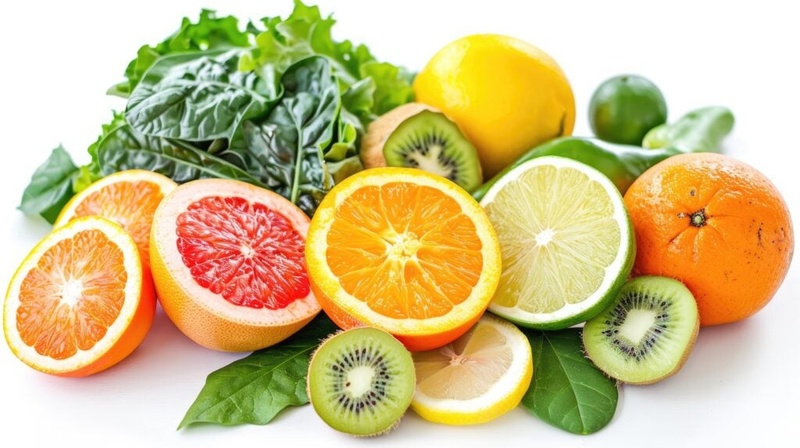
Citrus fruits, berries, and leafy greens are primary dietary sources of Vitamin C.
¶ Reality Check / Context
- The Saturation Limit: The pharmacokinetics of oral Vitamin C are tightly controlled by sodium-dependent vitamin C transporters (SVCTs). Absorption efficiency drops drastically at doses above 1,000 mg. Any excess is rapidly excreted in the urine, making "mega-dosing" oral vitamin C largely an exercise in creating expensive urine [2:2].
- Diet vs. Supplements: A diet rich in fruits and vegetables can easily provide 200 mg of Vitamin C daily, which fully saturates blood plasma levels in healthy individuals. Supplementation offers the most significant clinical benefits to those with inadequate dietary intake or increased metabolic demand (e.g., smokers, athletes) [1:4][2:3].
- Intravenous vs. Oral: Intravenous (IV) administration bypasses intestinal absorption limits, achieving plasma concentrations up to 100 times higher than oral dosing. While IV Vitamin C is being studied for sepsis and adjunctive cancer therapy, high-quality meta-analyses show no significant mortality benefit for critically ill patients in the ICU [10].
¶ Mechanism of Action
Vitamin C operates primarily as a highly effective electron donor, which explains both its antioxidant capacity and its role as an enzymatic co-factor.
- Antioxidant Activity: Ascorbic acid neutralizes reactive oxygen species (ROS) and reactive nitrogen species (RNS) in aqueous environments. It also regenerates other critical antioxidants, most notably alpha-tocopherol (Vitamin E), restoring its ability to protect lipid membranes [1:5].
- Collagen Synthesis: It acts as a necessary co-factor for the enzymes prolyl hydroxylase and lysyl hydroxylase, which add hydroxyl groups to proline and lysine residues in the procollagen molecule. This modification is essential for the stabilization of the collagen triple helix [11].
- Epigenetic Regulation: Recent research highlights Vitamin C's role as a co-factor for TET (Ten-Eleven Translocation) enzymes, which are responsible for DNA demethylation. This epigenetic mechanism is vital for stem cell pluripotency and may play a role in regulating the cellular aging process [7:1][12].
¶ Evidence Summary Table (Human Outcomes)
| Outcome | Evidence Quality (GRADE) | Summary of Findings | Reference |
|---|---|---|---|
| Common Cold Duration | Moderate/High | Regular supplementation (≥1g/day) shortens the duration of colds by ~8% in adults and ~14% in children. | [5:2][6:1] |
| Common Cold Incidence | High | Does not decrease incidence in the general population, but reduces risk by ~50% in individuals under intense physical stress. | [5:3] |
| Skin Hydration & Elasticity | Moderate | Oral supplementation and topical application significantly improve skin hydration, dermal density, and elasticity. | [4:3][8:1] |
| Endothelial Function | Low/Moderate | May improve endothelial function and modestly lower total cholesterol, particularly in diabetic or high-risk populations. | [9:1] |
| Mortality in Sepsis/ICU | Moderate/High | High-dose intravenous administration does not significantly reduce mortality or improve outcomes in critically ill patients. | [10:1] |
¶ Comprehensive Safety & Toxicology
Vitamin C has an excellent safety profile, but specific considerations exist for high-dose regimens:
- Gastrointestinal Effects: The most common adverse effects of oral doses exceeding 2,000 mg/day are diarrhea, nausea, and abdominal cramps, caused by the osmotic pull of unabsorbed vitamin C in the gut [1:6].
- Kidney Stones: Because a portion of vitamin C is metabolized to oxalate, high daily doses can increase urinary oxalate excretion. This theoretically increases the risk of calcium oxalate kidney stones, primarily in patients with a history of hyperoxaluria or existing renal dysfunction [1:7][3:1].
- Iron Overload: Vitamin C significantly enhances the absorption of non-heme iron. While beneficial for preventing anemia, chronic high-dose supplementation can exacerbate iron overload in individuals with hereditary hemochromatosis [1:8].
- G6PD Deficiency: Very high intravenous doses of Vitamin C can act as a pro-oxidant and trigger hemolytic anemia in patients with glucose-6-phosphate dehydrogenase (G6PD) deficiency [13].
¶ Comparisons & Engagement
- Vitamin C vs. Vitamin E: Both are powerful antioxidants, but Vitamin C is water-soluble (protecting the cytosol and blood) while Vitamin E is fat-soluble (protecting cell membranes). Vitamin C is required to "recycle" oxidized Vitamin E back to its active form.
- Ascorbic Acid vs. Sodium Ascorbate: Ascorbic acid is naturally acidic and may cause gastric irritation in sensitive individuals. Sodium ascorbate is a buffered (non-acidic) form that provides the same bioavailability while being gentler on the stomach.
- Liposomal Vitamin C: A specialized delivery method where Vitamin C is encapsulated in lipid vesicles. Studies suggest liposomal formulations may achieve higher intracellular concentrations and reduce gastrointestinal side effects compared to standard oral powders, though the clinical superiority remains debated [2:4].
¶ References
Office of Dietary Supplements. Vitamin C - Fact Sheet for Health Professionals. National Institutes of Health. https://ods.od.nih.gov/factsheets/VitaminC-HealthProfessional/ ↩︎ ↩︎ ↩︎ ↩︎ ↩︎ ↩︎ ↩︎ ↩︎ ↩︎
Lykkesfeldt J, Tveden-Nyborg P. The Pharmacokinetics of Vitamin C. Nutrients. 2019. https://ncbi.nlm.nih.gov/pmc/articles/PMC6835439/ ↩︎ ↩︎ ↩︎ ↩︎ ↩︎
Doseděl M, et al. Vitamin C—Sources, Physiological Role, Kinetics, Deficiency, Use, Toxicity, and Determination. Nutrients. 2021. https://pmc.ncbi.nlm.nih.gov/articles/PMC7918462/ ↩︎ ↩︎
Pullar JM, Carr AC, Vissers MCM. The Roles of Vitamin C in Skin Health. Nutrients. 2017. https://pmc.ncbi.nlm.nih.gov/articles/PMC5579659/ ↩︎ ↩︎ ↩︎ ↩︎
Hemilä H, Chalker E. Vitamin C for preventing and treating the common cold. Cochrane Database Syst Rev. 2013. https://ncbi.nlm.nih.gov/pmc/articles/PMC8078152 ↩︎ ↩︎ ↩︎ ↩︎
Ran L, et al. Extra Dose of Vitamin C Based on a Daily Supplementation Shortens the Common Cold: A Meta-Analysis of 9 Randomized Controlled Trials. Biomed Res Int. 2018. https://pmc.ncbi.nlm.nih.gov/articles/PMC6057395/ ↩︎ ↩︎
Zhai T, et al. Inhibitory effect of vitamin C on intrinsic aging in human dermal fibroblasts and hairless mice. BMB Rep. 2018. https://pmc.ncbi.nlm.nih.gov/articles/PMC6049637/ ↩︎ ↩︎
Miranda RM, et al. Effects of Oral Collagen for Skin Anti-Aging: A Systematic Review and Meta-Analysis. Nutrients. 2023. https://pmc.ncbi.nlm.nih.gov/articles/PMC10180699/ ↩︎ ↩︎
Mason SA, et al. Vitamin C intake potentially lowers total cholesterol to improve endothelial function in diabetic patients at increased risk of cardiovascular disease: A systematic review of randomized controlled trials. Front Nutr. 2022. https://www.ncbi.nlm.nih.gov/pmc/articles/PMC9659906/ ↩︎ ↩︎
Sato R, et al. Intravenous vitamin C monotherapy in critically ill patients: a systematic review and meta-analysis of randomized controlled trials with trial sequential analysis. Crit Care. 2023. https://www.ncbi.nlm.nih.gov/pmc/articles/PMC9990974/ ↩︎ ↩︎
Kocot J, et al. Vitamin C in Stem Cell Biology: Impact on Extracellular Matrix. Nutrients. 2017. https://ncbi.nlm.nih.gov/pmc/articles/PMC5415867 ↩︎
Monacelli F, et al. Vitamin C, Aging and Alzheimer’s Disease. Nutrients. 2017. https://ncbi.nlm.nih.gov/pmc/articles/PMC5537785 ↩︎
National Library of Medicine. Vitamin C (Ascorbic Acid) - StatPearls. https://www.ncbi.nlm.nih.gov/books/NBK499877/ ↩︎
Comments
Discussion